
NXP 74HC541D: An In-Depth Look at the High-Speed Octal Buffer/Line Driver IC
In the realm of digital electronics, efficient data transfer and signal integrity are paramount. The NXP 74HC541D stands as a fundamental component in addressing these needs, serving as a high-speed octal buffer and line driver integrated circuit (IC). This device is engineered to provide robust interface solutions between various sections of a digital system, ensuring signals are transmitted without degradation while offering essential isolation and driving capabilities.
The 74HC541D belongs to the 74HC family, which utilizes High-Speed CMOS technology. This technology combines the best of both worlds: the low power consumption characteristic of CMOS and the high-speed operation similar to LSTTL logic. The "octal" designation indicates that the IC contains eight independent buffers, each capable of handling one binary signal. These buffers are partitioned into two groups of four, each controlled by separate output enable pins (OE1 and OE2), providing flexible control over the data flow.
A primary function of this IC is signal buffering. In complex circuits, a single signal source often needs to drive multiple inputs, which can lead to overloading and signal degradation. The 74HC541D acts as an intermediary, isolating the source from the load. Each buffer presents a high input impedance to the source, drawing minimal current, and a low output impedance to the load, enabling it to sink or source up to 35 mA per channel. This capability ensures that even heavily loaded signals maintain their voltage levels and transition quickly between logic states.
Furthermore, the device excels as a line driver. When signals must traverse longer distances across a PCB or through cables, they are susceptible to noise and attenuation. The 74HC541D strengthens these signals, providing the current necessary to maintain integrity and overcome parasitic capacitances. Its outputs are designed to handle the capacitive loads typically encountered in bus-oriented systems, making it a staple in data buses, address buses, and other multi-point communication lines.
The control offered by the two active-low output enable pins is a key feature. For the outputs to be active, both OE1 and OE2 must be held low. If either enable pin is high, the outputs are forced into a high-impedance state (Hi-Z). This three-state capability is crucial for bus applications, allowing multiple devices to share the same data lines without conflict. Only the enabled device drives the bus, while all others remain in a high-impedance state, effectively disconnecting their outputs.
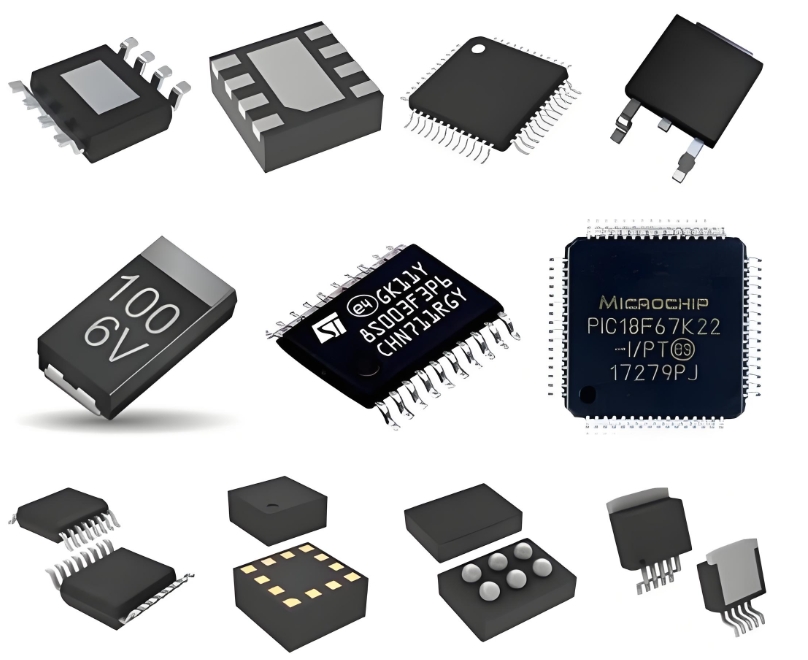
Housed in a standard 20-pin SOIC (Small Outline Integrated Circuit) package, the 74HC541D offers a compact footprint suitable for modern, high-density PCB designs. Its wide operating voltage range of 2.0 to 6.0 V allows for compatibility with various logic levels, including 3.3V and 5V systems.
ICGOODFIND: The NXP 74HC541D is an indispensable workhorse for digital design. It masterfully combines high-speed performance with low power consumption, offering robust buffering and driving strength for system buses. Its three-state output control ensures seamless operation in multi-device environments, making it a reliable and efficient choice for ensuring signal integrity across a wide array of applications.
Keywords: High-Speed CMOS, Octal Buffer, Line Driver, Three-State Output, Signal Integrity

